Honest thoughts from someone building AI into analytics work: I believe we might be skipping the hard part…
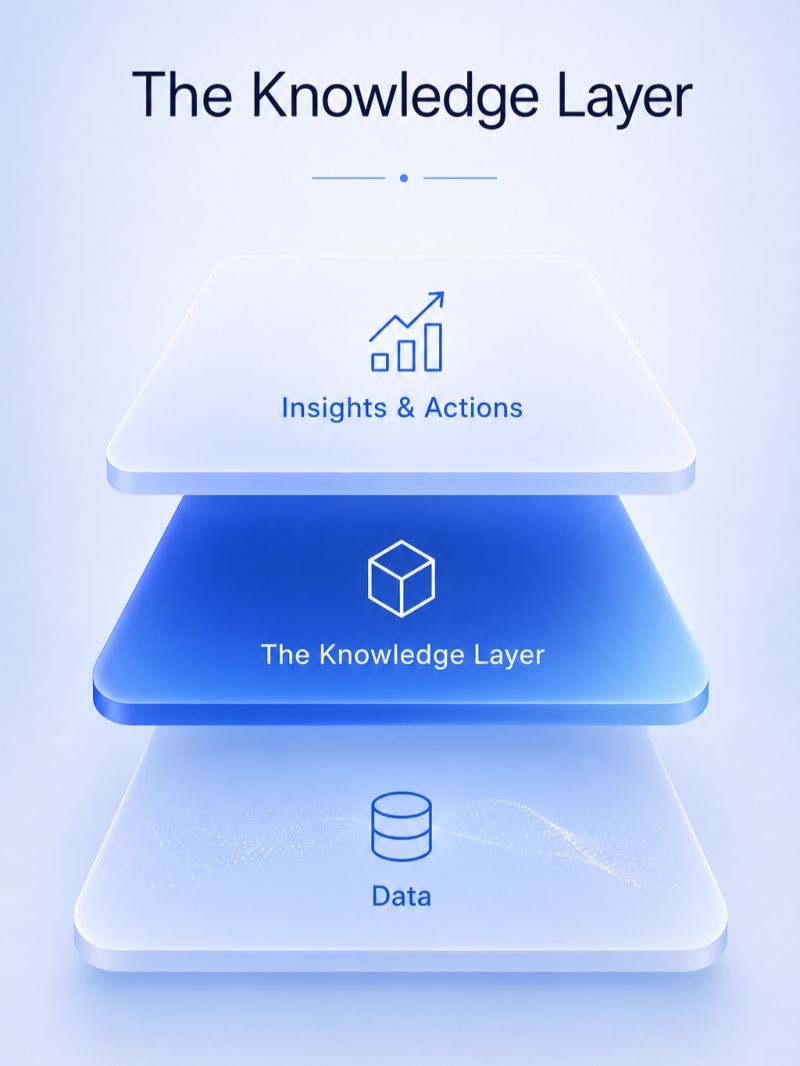
When people talk about using AI in analytics, the conversation almost always goes to the output: smarter dashboards, proactive alerts, agents that surface insights before anyone asks. And that stuff is real, I’m not dismissing it. But there’s something that has to exist before any of that can work, and I don’t see it talked about enough. The Knowledge Layer.
An experienced analyst carries a lot in their head. Not just SQL and spreadsheets, but also the context! Which numbers are always off in January and why. Which category behaves differently from the rest. Which metric looks alarming but isn’t, because of something that happened two years ago. That judgment is what separates a useful insight from a technically correct but practically useless one.
Now, some of this does exist in company wikis and Confluence pages, but it’s scattered and unstructured. AI can only work with what it can actually navigate, and for that, knowledge has to be modular and organised, so the right piece of context is accessible at the right moment. Not a 40 page document that has everything and helps with nothing.
And it’s not just about capturing what you know. It’s about capturing how things work around here: the unwritten operating logic of a business. Why does this team measure success this way? What does a “good week” actually look like for this category? All that stuff isn’t in any dashboard!
Then on top of it, there’s the harder problem: keeping it current. A strategy that was retired two months ago shouldn’t still be sitting in the knowledge layer influencing outputs. How does new context come in, and how does stale context go out? That’s a real design problem, not an afterthought.
There’s no demo for this, but I’m increasingly convinced every AI output sits directly on top of this, and if this foundation is shaky, everything built on it will be too.
Curious if others are thinking about this.
First posted on LinkedIn.